Chronic lower back pain: causes and solutions
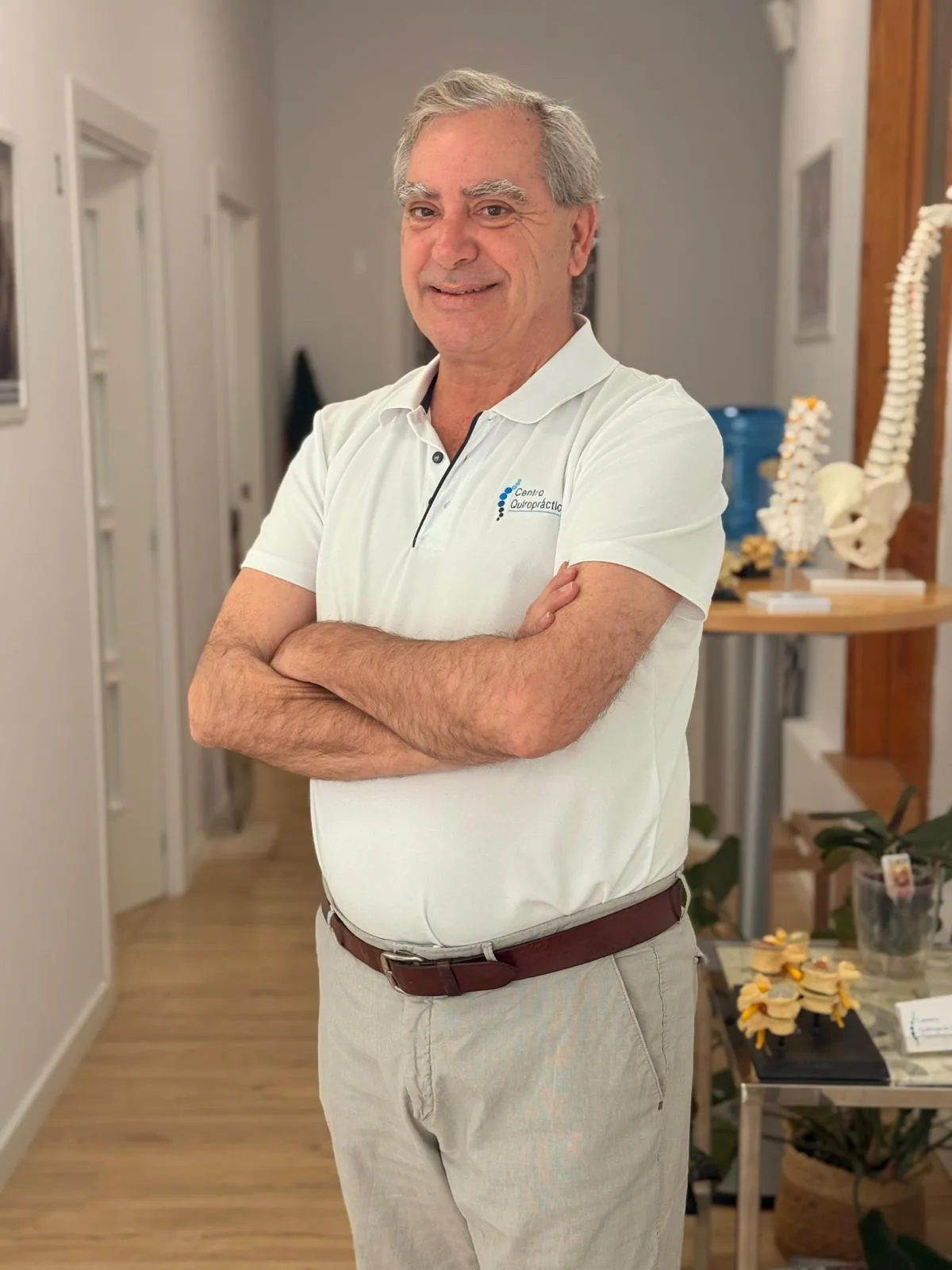
José María Puig Sobrino
Doctor of Chiropractic
Chronic lower back pain is one of the most common reasons people come to Centro Quiropráctico Puig. People who have spent months, sometimes years, with that nagging discomfort in the lower back that just won’t go away. It eases a little with anti-inflammatories, comes back the moment the medication stops, and ends up affecting day-to-day life: sleep, work, leisure time.
If that sounds familiar, you’re not on your own. Lower back pain is the leading cause of disability worldwide, according to the World Health Organization. And in Estepona and the Costa del Sol, where many people combine sedentary jobs with an active outdoor lifestyle, lumbar spines take more of a beating than it might seem.
What chronic lower back pain actually is
We talk about chronic lower back pain when discomfort in the lower back persists for more than 12 weeks. It is not a one-off episode. It is something that settles in and, if it isn’t tackled at the root, tends to get worse over time.
The way it shows up varies a lot from person to person. It can be a dull tension that builds up by the end of the day, noticeable stiffness when you get out of bed in the morning, or sharp pain with certain movements. In some cases it radiates into the buttocks or down the leg, which can suggest involvement of the sciatic nerve.
The most common causes
In the practice in Estepona, the patterns that come up again and again are fairly recognisable:
Joint dysfunction and restricted mobility. When the lumbar vertebrae lose their normal range of motion, the surrounding muscles contract to compensate. That sustained tension creates more stiffness, more pain, and a vicious circle that doesn’t break on its own.
Sedentary lifestyle and sustained postures. Hours sitting at the computer, behind the wheel or on the sofa. The lumbar spine is designed to move, and when it doesn’t, it deteriorates. The intervertebral discs are nourished through movement; they have no direct blood supply, so inactivity affects them directly.
Muscle imbalances. Weak abdominals, shortened psoas, inhibited glutes. When the muscles that should be stabilising your spine aren’t doing their job, the joints and discs end up taking a load that isn’t theirs.
Herniated and bulging discs. The disc wears down or migrates backwards, putting pressure on nearby nerve structures. It’s a common cause, although not always as serious as it sounds: many disc herniations are asymptomatic, or produce symptoms that improve with the right approach.
Stress and emotional load. Chronic stress produces sustained muscular tension, with a particular liking for the lower back and neck. It’s a factor you can’t ignore, especially in people who have been carrying work or personal pressure for months on end.
Sport without proper preparation. On the Costa del Sol there is a deep-rooted sporting culture: golf, padel, running, cycling, surfing. And it’s common to see lumbar spines worn down by overload, poor technique or a lack of stabilisation work.
How we work with lower back pain in the practice
The chiropractic approach is different from the conventional one. It’s not just about easing the symptom; the aim is to understand what’s behind it and work on that.
Thorough functional assessment. Before anything else, you need to know what you’re working with. At Centro Quiropráctico Puig we carry out a complete assessment: analysis of spinal mobility, postural assessment, neurological examination when indicated, and a review of the patient’s history. Only from that point does it make sense to propose a plan.
Cox Flexion-Distraction for disc-related pain. For cases involving the disc (herniations, bulges, pain that radiates down the leg), the Cox Flexion-Distraction technique works especially well. It involves a gentle, rhythmic traction of the lumbar spine on an articulated table, combined with manual mobilisation of the affected segment. It increases the disc space, reduces intradiscal pressure and favours the retraction of the herniated material. It doesn’t cause pain, and many patients notice relief in the first few sessions.
Specific chiropractic adjustments. Depending on the type of dysfunction, different techniques come into play: Gonstead for precise joint-by-joint corrections, Thompson with a drop table for less-forceful adjustments, or Activator for people who prefer a completely gentle, instrument-based approach. The vertebral adjustment restores mobility where it has been lost and reduces pressure on the nerve structures.
SOT when the pelvis is at the root of the problem. The Sacro Occipital Technique works on the relationship between the sacrum, pelvis and occipital bone. When the origin of the lower back pain has to do with imbalances at the base of the spine, this technique allows a global correction that segmental adjustments alone can’t always achieve.
Care plan and follow-up. Chronic lower back pain isn’t resolved in a single visit. We work with a structured plan, with sessions spaced out further as the body responds. It is supported by stabilisation exercises, specific stretches and ergonomic recommendations so progress holds up outside the practice.
What the research says
The scientific evidence on chiropractic and lower back pain is solid. The clinical guidelines of the American College of Physicians recommend manual therapies, including chiropractic adjustment, as a first-line approach for chronic lower back pain, before turning to medication. Studies published in The Lancet and JAMA have confirmed that spinal manipulation significantly improves both pain and function in people with chronic lower back pain.
The Cox Flexion-Distraction technique has decades of clinical research behind it and is supported by more than 50 studies published in leading journals.
When it makes sense to look for help
If you’ve had lower back pain for more than three months, if it’s limiting your daily activity, if you need medication on a regular basis to get through the day, or if you’ve been through several professionals without finding a lasting solution, it’s worth exploring chiropractic care.
In Estepona and on the Costa del Sol there are people living with lower back pain for years, assuming it’s just something to learn to live with. It doesn’t always have to be that way.
Take the first step
At Centro Quiropráctico Puig we assess your situation thoroughly and honestly. If chiropractic care can help you, we’ll explain why clearly. If you need a different approach, we’ll tell you that too.
Book your first visit and let’s start looking at what’s going on in your spine. We see patients from Estepona, Manilva, Casares, San Roque and across the western Costa del Sol.
José María Puig Sobrino
Doctor of Chiropractic, Centro Quiropráctico Puig
Doctor of Chiropractic (D.C.) from Cleveland University Kansas City. AEQ member #1036. Specialist in SOT, Gonstead and Cox Flexion-Distraction. Over a decade looking after families in Estepona and the Costa del Sol.