Chiropractic for athletes on the Costa del Sol
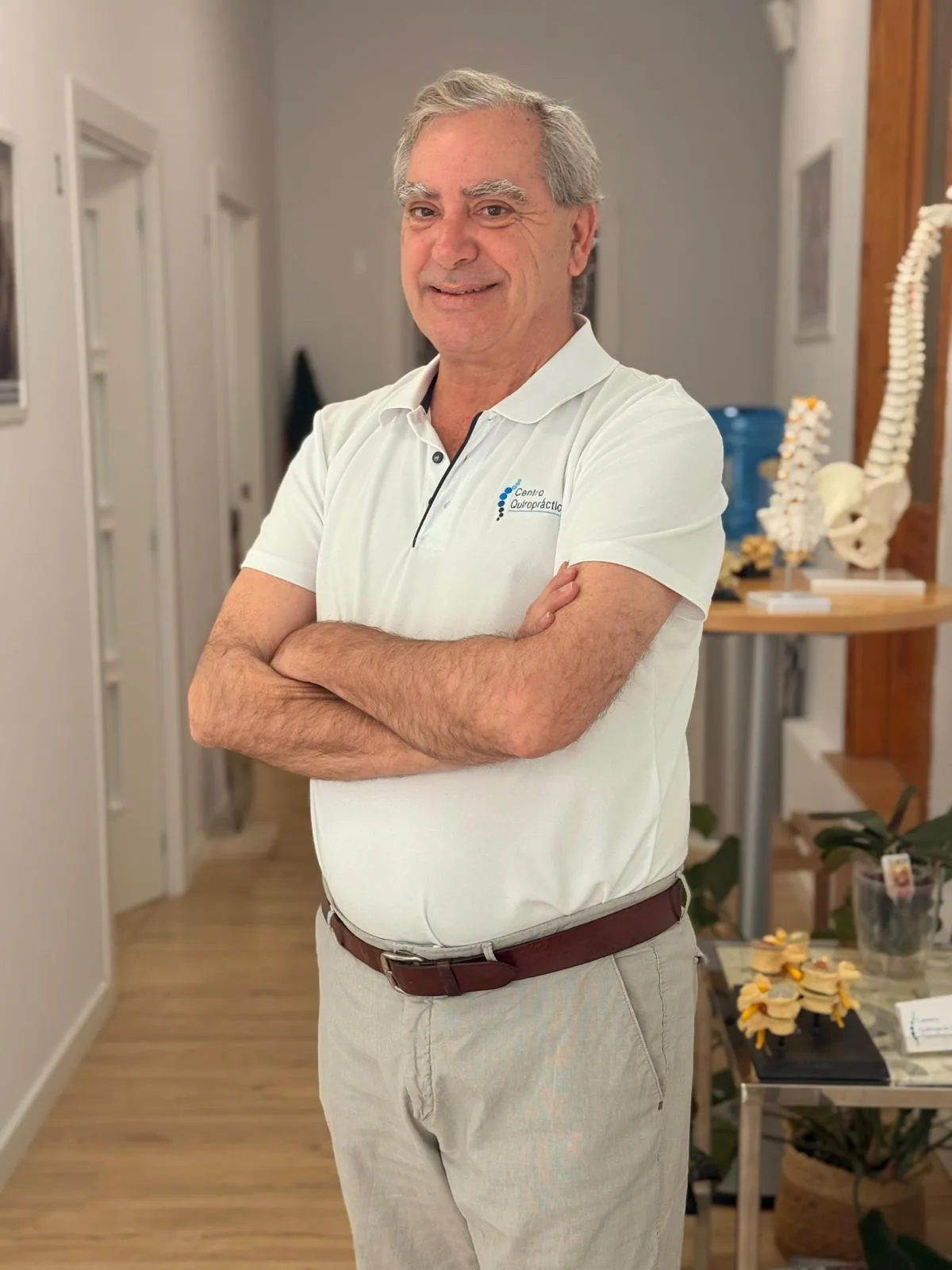
José María Puig Sobrino
Doctor of Chiropractic
The Costa del Sol isn’t just a holiday destination. For those who live here, it’s an active sporting setting twelve months of the year. More than three hundred days of sun, the Mediterranean on your doorstep, padel courts in every urbanisation, cycling routes that climb from the sea to the Alcornocales Natural Park, and golf courses that run from Sotogrande to Marbella with barely a gap. Estepona sits right in the middle of all that.
In my practice, most of the people who come to see me aren’t sofa-dwellers. They’re athletes. Some compete, others simply can’t imagine a day without moving. And they all have one thing in common: their bodies feel the accumulated effort more than they’d like.
What sport does to your spine
Every repetitive physical activity creates movement patterns that, over time, leave their mark on the musculoskeletal system. That isn’t a problem, it’s a logical consequence. The body adapts. But those adaptations can turn into joint restrictions, pelvic imbalances or compensations that, if not corrected, end up limiting performance or leading to injuries.
Chiropractic care isn’t just a tool for when something hurts. The athletes who benefit most are precisely those who come in before the problem appears. A spine that works well transmits force more efficiently, responds more quickly and recovers in less time.
Surf and water sports
Estepona has a community of surfers many people don’t expect to find here, but La Rada beach and the breaks around San Pedro de Alcántara give plenty of waves when the Poniente wind kicks up. Surfing demands a thoracic and lumbar mobility that few sports test so thoroughly: the pop-up, the surf stance and the repeated falls into the water create accumulated tensions that I notice straight away in anyone who surfs regularly.
For surfers I work especially on the mobility of the thoracic spine and on the mechanics of the lumbo-pelvic complex. The SOT Technique works very well for restoring balance to the pelvis and sacrum, which in surfers is often compromised by the asymmetry of the lead foot.
Golf: the sport that punishes the spine most
The density of golf courses between Estepona and Marbella is unrivalled in Spain. And golf, for all its apparent elegance, is one of the most demanding movements for the spine. The swing involves a powerful thoracic rotation, lumbar compression at impact and cervical extension in the follow-through. Hundreds of times per round, week after week.
The patterns I see most often in golfers are restricted thoracic rotation, low lumbar pain and cervical tension on the dominant side. Cox Flexion-Distraction works especially well to relieve the lumbar disc compression that comes from regular play. Combined with adjustments aimed at restoring thoracic mobility, many golfers notice a clear improvement in the range of their swing, and the discomfort they had quietly normalised eases as well.
Padel: a lot of intensity in a small space
Padel is probably the sport that brings the most injuries into my practice at the moment. The sharp changes of direction, the shots from awkward positions, the sudden stops, all of it on a small court at high intensity. The lumbar spine, shoulders and knees pay the price.
The chiropractic work with padel players combines vertebral adjustments with specific mobility recommendations for the lumbar complex and the dominant shoulder. The aim is to keep a sound spinal mechanics that lets you enjoy the game rather than just endure it.
Running and trail
Running along the Estepona seafront, on the routes between San Pedro de Alcántara and Benahavís, or on the mountain tracks near Casares is something else. But the repetitive impact on the spine and joints calls for an efficient running biomechanics. A pelvic imbalance or a restriction in the sacroiliac joint can completely alter the stride pattern and multiply the risk of injury.
With runners I tend to work a lot on the pelvis and sacrum with the SOT Technique, and on the lumbar segment with the Gonstead Technique when there are more localised restrictions. Many runners who come in with knee or iliotibial band complaints discover that the origin of the problem was several segments higher up.
Cycling: hours of lumbar flexion and cervical extension
The routes from Estepona into the interior (Casares, Gaucín, Jimena) are a gift for cyclists. They’re also a challenge for the spine. Hours in a position of lumbar flexion and cervical extension create very recognisable patterns of restriction: high thoracic stiffness, tension at the base of the skull, shortening of the posterior chain. The chiropractic adjustment helps to counter those postural effects so the cyclist can train more consistently and with less accumulated tension.
Triathlon: when three sports add up
Estepona and Marbella host several triathlon events through the year, and the triathlete community on the Costa del Sol is very active. The triathlete puts the body through the combined demands of swimming, cycling and running, with the position changes that come from moving from one to the other. It’s a profile that calls for chiropractic care adapted to that variety of loads and positions.
With triathletes I usually carry out a biomechanical assessment that considers the three sports separately and how they interact. Swimming, for example, requires a thoracic and shoulder mobility that cycling tends to restrict. Working on that tension allows for better swimming and carries over to the run as well.
How I work with athletes
There is no single protocol. Every person arrives with their own history, their sport, their training hours and their specific compensations. The initial assessment lets me understand what’s going on and decide which techniques fit best: Gonstead for well-localised specific restrictions, SOT for imbalances in the sacropelvic complex, Cox Flexion-Distraction to decompress the lumbar disc, or the Activator Method when a gentler and more specific adjustment is needed.
Alongside the adjustments, I give mobility recommendations tailored to each discipline. Chiropractic care works better when it goes hand in hand with active work by the athlete.
If you train or compete on the Costa del Sol, in Estepona, Marbella, San Pedro de Alcántara or anywhere between Málaga and Gibraltar, and you’d like to assess how chiropractic care may help your performance and your recovery, book your first visit. The practice is in Estepona, and the first assessment will let us see exactly what your body needs.
José María Puig Sobrino
Doctor of Chiropractic, Centro Quiropráctico Puig
Doctor of Chiropractic (D.C.) from Cleveland University Kansas City. AEQ member #1036. Specialist in SOT, Gonstead and Cox Flexion-Distraction. Over a decade looking after families in Estepona and the Costa del Sol.
Related articles
6 chiropractic techniques: Gonstead, Cox, SOT and more
Gonstead, Cox Flexion-Distraction, Thompson, Diversified, Activator and SOT: the 6 techniques Dr. Puig (AEQ #1036) uses in Estepona.
ChiropracticChronic stress and neck tension: the connection
Why stress settles in your neck and shoulders, and how chiropractic care can help break the cycle. Dr. Puig, Estepona, Costa del Sol.