The SOT technique: what it is and how it works
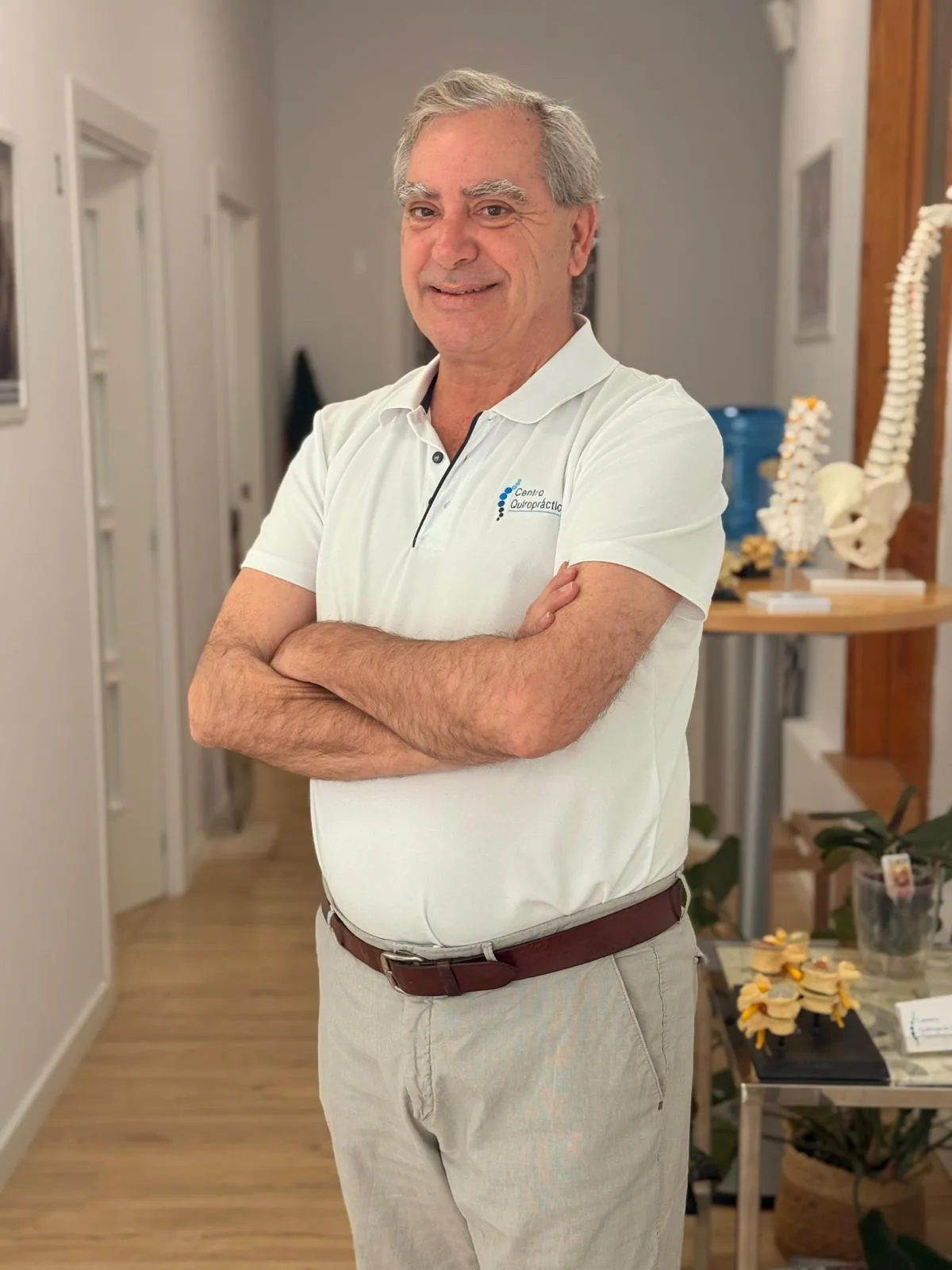
José María Puig Sobrino
Doctor of Chiropractic
When someone asks me which chiropractic technique I use, the short answer is SOT. The long answer is this article.
The Sacro Occipital Technique (known as SOT for short) has been the heart of how I work since I qualified as a chiropractor. It isn’t just one more technique in my toolkit: it’s the foundation from which I assess every patient and from which I design every care plan. A chiropractor in Estepona using it as their main technique isn’t common, and that’s precisely what I want to explain in this article.
Where SOT comes from
Dr. Major Bertrand DeJarnette was an engineer before he became a chiropractor, and it shows in the way he built this technique. He spent decades studying the mechanical relationship between the sacrum (the triangular base of the spine) and the occipital bone, which forms the base of the skull. His starting hypothesis was that these two structures are functionally connected through the meninges, the membranes that surround and protect the central nervous system.
Cerebrospinal fluid flows between sacrum and occipital. When that circulation moves well and the mechanics of the pelvis are stable, the nervous system works under optimal conditions. When there’s an imbalance (from tension, a fall, years of poor posture), dysfunctions appear that can show up in very different ways: lower back pain, neck tension, headaches, mobility issues. SOT works on the origin of that imbalance, not just the symptom.
The three categories: the heart of the method
What sets SOT apart from other chiropractic techniques is its classification system. Before doing anything, I assess the patient using a series of functional indicators (palpation, postural analysis, neurological tests) to determine which category they fall into. That category then defines the entire approach for the session.
Category I. Here the main dysfunction affects the meningeal system and the flow of cerebrospinal fluid. The work is done with pelvic blocks: specific foam wedges placed under the patient’s pelvis in particular positions. The correction doesn’t come from me: it comes from the weight of the body itself combined with the breath. It’s a gradual, gentle and very precise process.
Category II. The focus is on the sacroiliac joint, the connection between the sacrum and the iliac bones of the pelvis. Instability in this area is a common cause of chronic lower back pain, and it’s a pattern I see a lot in people who have spent years with discomfort that just doesn’t resolve. The blocks are placed differently from Category I, aiming to restore the mechanics and stability of that joint.
Category III. This category involves disc involvement. The approach is more specific and usually combines the blocks with additional manual techniques aimed at reducing pressure on the disc and nerve structures. It isn’t the most common category, but when it appears, SOT offers very precise tools to work with it.
The category can change from session to session. Sometimes a patient starts in Category II and progresses to Category I as pelvic stability improves. That evolution is itself valuable clinical information.
Cranial work: what many don’t expect
SOT also includes cranial adjustment techniques. This surprises many patients when we mention it on the first visit. The sutures of the skull have a minimal but real mobility, and the tensions that build up in that area can influence the central nervous system in ways that aren’t always obvious.
The cranial work is especially delicate. It’s done with very light contacts, almost no pressure. Nothing like what many people picture when they think of chiropractic. That’s precisely why it’s a technique that builds a lot of trust in patients looking for a gentle approach, or those who have had previous experiences that left them a bit wary.
What a session looks like in practice
The first visit always begins with a thorough assessment. I need to understand the history, the posture, how the patient moves and which SOT indicators they’re showing in that moment. Only then do I design the approach.
A typical session is calm. The patient lies on the table, I place the blocks in the positions the category calls for, and we work with the breath. There are no high-velocity manipulations unless they’re needed. Many patients relax deeply during the session. A few have fallen asleep, which I take as a good sign.
At the end, I go over what we did and why. Understanding the process helps patients become more aware of their own patterns and to take an active part in their care.
Who it makes most sense for
SOT can be useful for almost any kind of patient, but in my practice in Estepona there are profiles that benefit especially clearly:
- People with chronic lower back or pelvic pain who have tried other approaches without lasting results.
- Patients with sacroiliac instability or recurrent episodes of pelvic blockage.
- Those who prefer a gentle approach and want to avoid high-velocity manipulations.
- Athletes on the Costa del Sol who need to maintain optimal biomechanical function without interrupting their activity.
- People with frequent headaches or neck tension linked to imbalances at the base of the skull.
It is also a technique that combines well with other approaches. Depending on what each patient needs, I pair it with Gonstead, Cox Flexion-Distraction or other chiropractic tools. SOT doesn’t exclude; it complements.
Why specialising in SOT matters
It isn’t a technique you learn in your degree and that’s it. It calls for specific additional training, ongoing practice and a deep grasp of craniosacral biomechanics. Most chiropractors in Spain don’t have it as their main specialism.
It’s one of the reasons patients come to see me from Marbella, from Málaga city, from the Serranía de Ronda. Not because Estepona is the only place where chiropractic is practised on the Costa del Sol, but because SOT as a main technique is uncommon and the results in certain profiles are hard to achieve any other way.
I’m a member of the Spanish Chiropractic Association (AEQ) with number 1036. The AEQ brings together chiropractors with recognised university-level training in Spain, and it’s the guarantee a patient has that they’re in the hands of someone trained to European Council on Chiropractic Education standards.
Got any questions about whether SOT is right for you?
If you’ve been looking for a solution for something that just doesn’t seem to resolve, or you’re simply curious about how this approach works, get in touch. On the first visit we assess your situation in detail and I’ll explain clearly which approach makes most sense for your case.
Centro Quiropráctico Puig is in Estepona, in the heart of the Costa del Sol. Book your first visit and let’s see how I can help.
José María Puig Sobrino
Doctor of Chiropractic, Centro Quiropráctico Puig
Doctor of Chiropractic (D.C.) from Cleveland University Kansas City. AEQ member #1036. Specialist in SOT, Gonstead and Cox Flexion-Distraction. Over a decade looking after families in Estepona and the Costa del Sol.
Related articles
6 chiropractic techniques: Gonstead, Cox, SOT and more
Gonstead, Cox Flexion-Distraction, Thompson, Diversified, Activator and SOT: the 6 techniques Dr. Puig (AEQ #1036) uses in Estepona.
ChiropracticChiropractic for athletes on the Costa del Sol
Surf, padel, golf, running, cycling or triathlon in Estepona and Marbella: how chiropractic care with Dr. Puig may improve performance and recovery.