Is chiropractic safe? Evidence, myths and reality
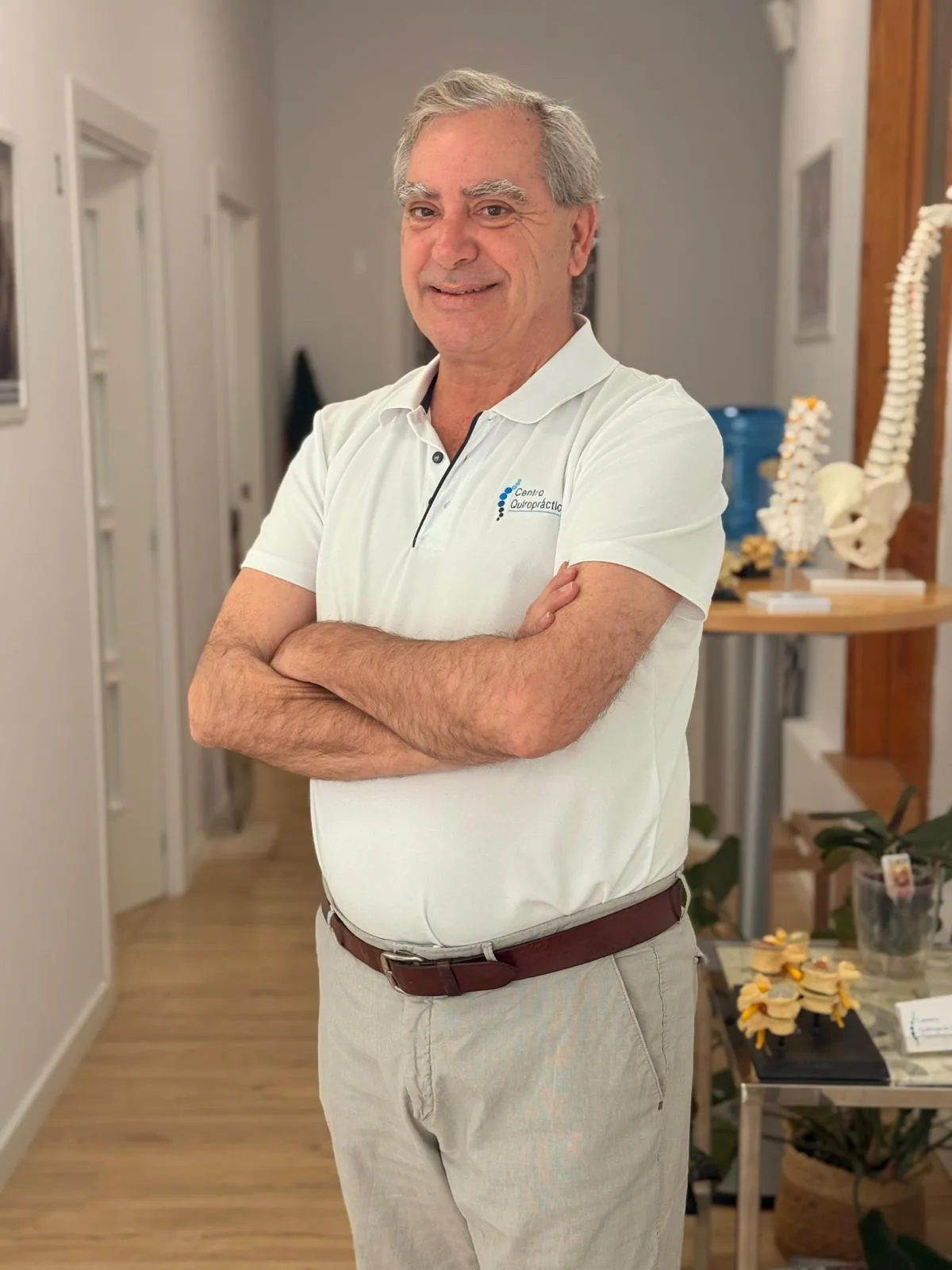
José María Puig Sobrino
Doctor of Chiropractic
It’s the question I hear most often, both in the practice and when someone finds out what I do for a living in a casual conversation here in Estepona. And I think it’s a very reasonable question. Before placing yourself in the hands of any health professional, you have every right to know what you can expect.
The short answer: yes, chiropractic is safe when practised by a properly trained professional. But that line on its own doesn’t tell you much, so let’s go into it.
What the scientific research says
There are decades of peer-reviewed literature on the safety of chiropractic care. Systematic reviews published in journals such as Spine, The Spine Journal and the BMJ consistently conclude that the chiropractic adjustment is a safe procedure for working with musculoskeletal problems, with a genuinely low rate of serious adverse events.
The most common side effects are mild and resolve on their own: a bit of local tension or soreness in the area that was adjusted, some fatigue, a feeling similar to the day after a workout. They go away within 24 to 48 hours. Nothing I haven’t experienced myself during my training.
The World Health Organization recognises chiropractic globally and has published specific guidelines on training and safe practice. In Spain, the profession is not officially regulated as a healthcare profession, and that’s something to be clear about so as not to mislead patients. Chiropractors who are members of the AEQ meet those same international standards of training and safety.
Myths worth dismantling
“They can break something.” No. The chiropractic adjustment is a controlled movement: high velocity, low amplitude, applied with precision to the joint. Nothing breaks and nothing dislocates. Getting to that point requires a five- or six-year university degree with thousands of hours of supervised practice before seeing patients independently.
“It’s dangerous for the neck.” Cervical manipulation has generated quite a bit of debate, I understand that. What the current evidence says is that the risk of serious adverse events is very low: some studies place it in a range comparable to taking an anti-inflammatory medication regularly. There are gentle techniques for cervical work that don’t involve rotation or wide movements. Depending on each patient’s assessment, I work with techniques such as Gonstead, which allows very high precision, or with the Activator Method, which doesn’t require any abrupt movement.
“Once you start, you can’t stop.” There is no physical dependence on the adjustment. What often happens is that people notice the difference and choose to keep coming on a regular basis because it suits them. That isn’t dependence, it’s an informed choice. Nobody is forcing anyone to do anything.
“It only works for back pain.” The chiropractic adjustment works on the neuromusculoskeletal system, which has a wide-reaching influence on how the body functions. Tension headaches, mobility issues in the hip or shoulder, chronic muscle tension, posture-related discomfort: these are situations that may improve with chiropractic care, well beyond the classic lower back pain.
Who can receive chiropractic care?
Most people, across a wide range of ages. At the centre we see everyone from children, with adapted techniques, to patients in their 70s and 80s. Living on the Costa del Sol has its perks for general well-being, but the climate doesn’t shield you from a sedentary lifestyle, office posture, or the joint wear that comes with the years.
That said, there are situations in which a chiropractic adjustment is contraindicated or calls for specific precautions. That’s precisely why the initial assessment matters so much. Before any adjustment I carry out a full functional assessment: case history, postural examination, mobility analysis and, where appropriate, a review of any imaging you bring with you. If during that assessment I identify something that needs a different kind of attention, I tell you clearly and point you towards the right professional. I’ve been doing this for more than a decade, I started practising around 2012, and I’ve learned that being open with the patient is what builds real trust.
You can have a look at the different patient profiles we work with if you want a clearer picture.
Why choosing the right chiropractor matters
The safety of chiropractic depends, to a large extent, on who is practising it. A specific five- or six-year university degree, accredited by the European Council on Chiropractic Education (ECCE), is the standard that sets a properly trained chiropractor apart from someone who has done a weekend course.
In Spain, the simplest way to check is to verify that your chiropractor is a member of the Spanish Chiropractic Association (AEQ). The AEQ, founded in 1986 and with more than 430 members across Spain, only admits chiropractors with internationally recognised university-level training. In practice, it is the strongest guarantee you have as a patient.
I’m an active member of the AEQ with registration number 1036. It’s not just a number: it means a commitment to the sector’s most demanding ethical and practice standards, and ongoing training that doesn’t stop with the degree.
Got any questions before you come?
It is completely normal to have them. At Centro Quiropráctico Puig, in the centre of Estepona, we dedicate a good part of the first visit to answering questions and explaining exactly what we’re going to do, step by step, and why.
If you’d like to get ready beforehand, you can have a look at our frequently asked questions section or simply get in touch. We see people from all over the Costa del Sol and the province of Málaga (Estepona, Marbella, San Pedro, Manilva, Casares) and there’s always time for a conversation with no commitment.
José María Puig Sobrino
Doctor of Chiropractic, Centro Quiropráctico Puig
Doctor of Chiropractic (D.C.) from Cleveland University Kansas City. AEQ member #1036. Specialist in SOT, Gonstead and Cox Flexion-Distraction. Over a decade looking after families in Estepona and the Costa del Sol.
Related articles
6 chiropractic techniques: Gonstead, Cox, SOT and more
Gonstead, Cox Flexion-Distraction, Thompson, Diversified, Activator and SOT: the 6 techniques Dr. Puig (AEQ #1036) uses in Estepona.
ChiropracticChiropractic for athletes on the Costa del Sol
Surf, padel, golf, running, cycling or triathlon in Estepona and Marbella: how chiropractic care with Dr. Puig may improve performance and recovery.